Wild Places
Playas Are Lakes That Exist For Days At A Time
Dry lake beds in the American West flood shallowly and briefly after rain, and that rhythm supports a specialized biology and a surface easily damaged when wet.

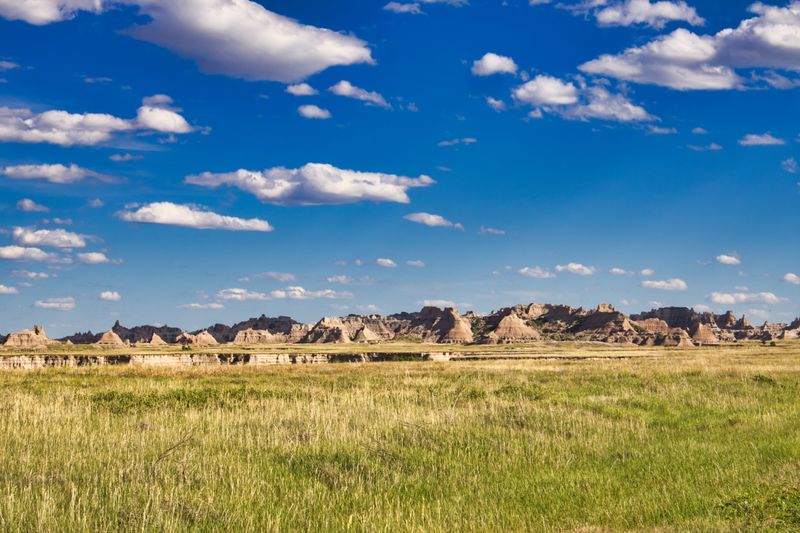
The flat white basins of the desert West are lakes for a few days a year. Their biology and their fragility both follow from how briefly they hold water.
The basin has no outlet
A playa sits at the low point of a closed drainage, so water entering it leaves only by evaporation or by soaking downward. Nothing flows out.
Dissolved minerals carried in therefore stay behind, accumulating over long periods and producing the salt and clay crusts that give these surfaces their color.
Because the floor is almost perfectly level, a small volume of water spreads across an enormous area at a depth of a few inches.
Life runs on a compressed schedule
Fairy shrimp and other crustaceans persist as drought-resistant eggs in the dry sediment, sometimes for years, hatching within days of inundation.
They must reach maturity and produce the next generation before the water disappears, which compresses an entire life cycle into a couple of weeks.
Migrating shorebirds time their movements to exploit these pulses, and a flooded playa can hold large numbers of birds in a place that appears lifeless the rest of the year.
The wet surface takes an impression permanently
Wet playa clay records tracks with high fidelity, and once the surface dries those ruts harden into a durable feature.
Wind and subsequent flooding erase them slowly, so vehicle tracks made in a single wet afternoon can remain legible for years.
That is why access to many playas is closed when wet, and the closure protects the surface rather than the driver.
Dust links the playa to distant places
Dry playa surfaces are a major source of wind-blown dust, and disturbance of the crust increases how much is lifted.
That dust travels far, and where it settles on mountain snowpack it darkens the surface and accelerates melting.
Diverting the water that historically reached a basin therefore has consequences well beyond it, connecting irrigation decisions to snowmelt timing in distant ranges.
They are used because they are flat
The hardness and flatness of dry playas have made them sites for land speed testing, aviation and large gatherings, uses that no other terrain supports as easily.
Those uses concentrate on a surface whose recovery from disturbance is measured in years, and management usually restricts them to periods when the ground is dry and hardest.
Where a basin is both a recreation site and a wildlife area, the calendar does most of the work of separating the two uses.
Questions readers ask
Is deadwood a fire or disease risk?
Standing and fallen deadwood in woodland is habitat rather than hazard in most temperate conditions. Safety pruning near paths is a separate and legitimate matter.
How can I help record ancient trees?
National tree inventories accept public records with photographs, girth measurements and locations, and are largely volunteer-built.