Wild Places
Peat bogs store more carbon than forests, and almost nobody visits them
Blanket bog is the least photogenic landscape in Europe and among the most important. Here is what is actually happening underfoot.
Both approaches to peat bog work. What differs is what they cost you, and the cost is what this sets out.
The difference in one place
- Healthy peat accumulates roughly a millimetre a year and stores carbon indefinitely.
- Drained peat switches from a carbon sink to a carbon source, often within a season.
- Restoration is mostly about blocking drainage ditches, which is cheap compared with the carbon involved.
Peat is dead plant matter that never finished decomposing
In waterlogged, acidic, oxygen-poor conditions, sphagnum moss and other bog plants accumulate faster than they break down. The result builds at roughly a millimetre a year, so a three-metre peat depth represents something like three thousand years of accumulation. That entire depth is stored carbon, held in place by nothing more complicated than being permanently wet.
The same chemistry preserves everything else that falls in, which is why bogs hold pollen sequences, whole tree stumps, timber trackways and occasionally bodies, and why draining one destroys an archive as well as a carbon store.
Drainage flips the whole system
Historic drainage for grazing, forestry and peat cutting cut ditches across enormous areas of upland bog. Once water drains away, oxygen reaches the peat and decomposition restarts, releasing carbon that has been locked up for millennia. A drained bog can emit more carbon per hectare than a comparable area of farmland, which is why peatland restoration appears in national climate plans.
In practice, the switch is fast: it takes decades to build a bog and a single dry season to start losing it.
Restoration is unglamorous and effective
The core technique is blocking ditches with peat dams, plastic piling or timber, so the water table rises back toward the surface. Bare peat is reseeded or covered with brash to stop it eroding while vegetation re-establishes. Nothing about this is technically difficult; the constraints are access, land ownership and the fact that the results are invisible from a road.
In practice, a bog is also a single hydrological unit, so restoring one holding while the neighbour's ditches keep draining achieves very little, which makes peatland one of the few habitats where the work has to be organised across ownership boundaries before it can start at all.
What lives there is specialised and scarce
Bog habitats support species that occur almost nowhere else, from sundews and bog asphodel to breeding waders such as dunlin and golden plover. Many of these are declining precisely because the habitat is fragmented by drainage and burning. The species list is short, which makes it easy to dismiss and easy to lose.
The nutrient poverty explains the oddest residents: sundews and butterworts trap insects because rain-fed peat supplies almost no nitrogen, and a plant that cannot draw it from the ground has to catch it instead.
Walking on bog is a different discipline
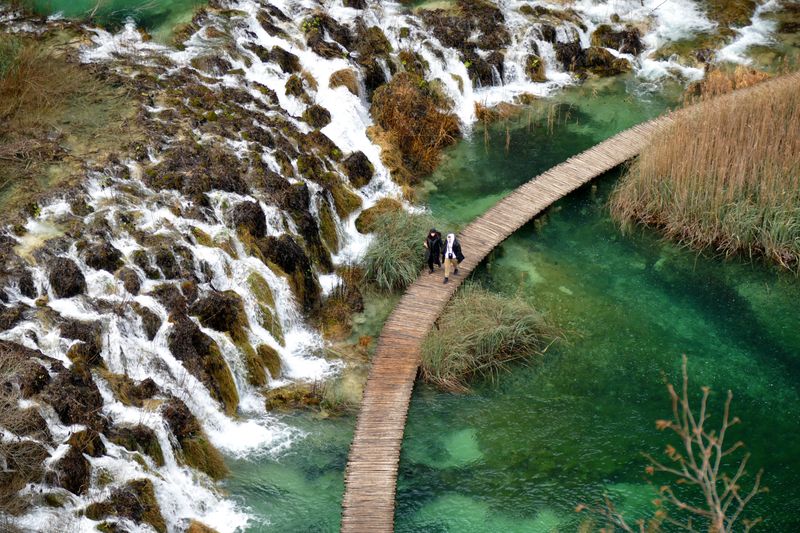
Blanket bog is slow, wet and navigationally featureless, which is why long-distance routes avoid it where they can. Where paths do cross it, boardwalk or stone causeway is usually the only sustainable option, because a footpath on peat becomes a ditch. Off the path, footfall on bare peat does real and long-lasting damage, and the ground does not knit back together the way grassland does.
In practice, it is also unusually hard to navigate, since there is almost nothing for a position to hang on; the one readable pattern is that pools and hummocks on an intact bog tend to line up across the slope rather than down it, which gives a rough sense of the fall of the ground in flat light.
None of this is uniform across a country the size of most of these.
Why it stays underfunded
Peatland has no scenery in the conventional sense, no charismatic large mammal and no tourism economy to lobby for it. Its value is a number in a carbon inventory, which is a poor substitute for a photograph in a funding application.
The detail that matters: that mismatch between ecological importance and public affection is the central problem of bog conservation. What has begun to change it is administrative rather than aesthetic: emissions from drained peatland have only recently been counted in national greenhouse gas inventories, and a habitat that appears in a country's own emissions total attracts attention that no species list ever did.
Side by side
| Consideration | What it means in practice |
|---|---|
| Peat is dead plant matter that never finished decomposing | Healthy peat accumulates roughly a millimetre a year and stores carbon indefinitely. |
| Drainage flips the whole system | Drained peat switches from a carbon sink to a carbon source, often within a season. |
| Restoration is unglamorous and effective | Restoration is mostly about blocking drainage ditches, which is cheap compared with the carbon involved. |
The takeaway
The most important landscape you will walk across is the one that looks like nothing at all.
Go slowly enough to notice, and most of this stops being advice and starts being obvious.
Questions readers ask
Is peat-free compost actually better?
For the bog, yes, unambiguously — horticultural peat extraction destroys the habitat and releases the stored carbon. Peat-free composts have improved substantially and now perform comparably for most uses.
How can I tell if a bog is healthy?
Look for sphagnum. A wet, hummocky surface with abundant living sphagnum moss and standing water is a functioning bog; dry, cracked peat with heather and bare patches is a degraded one.