Wild Places
Geyser Basins Are Plumbing That Rearranges Itself
Hydrothermal features depend on a fragile underground network of heat, water and mineral-lined channels, and small changes to that network can silence a geyser permanently.

A geyser is a temporary arrangement of underground plumbing that happens to work. Small changes in any part of the system end the eruption for good.
Three conditions must coincide
Eruptions require a heat source close to the surface, an abundant water supply, and a constricted channel that allows pressure to build rather than simply venting.
Most hot regions have the first two, which is why geysers are rare while hot springs are comparatively common.
The constriction is the fragile element, formed by mineral deposits laid down over long periods and easily altered.
The eruption is a pressure release
Water deep in the channel is heated above the surface boiling point but held liquid by the weight of water above it.
When some of that column boils and lifts, the pressure below drops suddenly and a large volume flashes to steam at once, driving the eruption.
Refilling and reheating take time, which is why intervals between eruptions are long compared with the eruptions themselves.
Chemistry builds and blocks the channel
Circulating water dissolves silica from hot rock and deposits it as the water cools near the surface, lining the channel and sealing leaks.
The same process gradually narrows or closes passages, so a feature's behavior changes over decades without any external cause.
Objects thrown into a vent are a common way of destroying that plumbing, and features silenced this way generally do not recover.
Basins behave as connected systems
Features in a basin share underground reservoirs, so activity at one can change activity at another. A new spring often means a neighbor has lost water.
Earthquakes shift the network abruptly, and changes in eruption intervals across a basin have followed distant seismic events.
Seasonal variation also occurs, since the water supply ultimately comes from precipitation and snowmelt reaching the system slowly.
The surface around a feature is thin
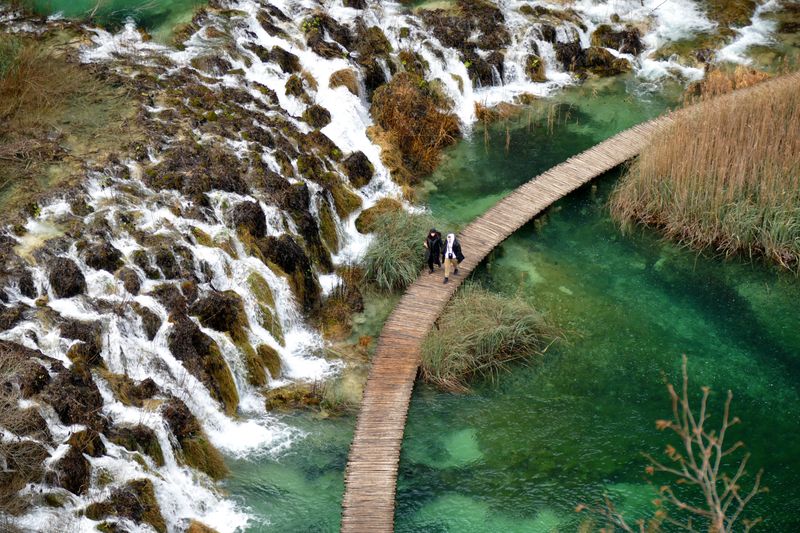
Crust over hot ground can be a fragile shell above scalding water, which is why boardwalks in these areas are barriers rather than conveniences.
The thermal ground also supports specialized microbial communities whose pigments produce the coloring in runoff channels, and a footprint destroys a mat that took years to form.
Those communities are studied for organisms adapted to extreme heat, which is one reason access to thermal areas is restricted well beyond what visitor safety alone would require.
Questions readers ask
Is deadwood a fire or disease risk?
Standing and fallen deadwood in woodland is habitat rather than hazard in most temperate conditions. Safety pruning near paths is a separate and legitimate matter.
How can I help record ancient trees?
National tree inventories accept public records with photographs, girth measurements and locations, and are largely volunteer-built.