Trails & Routes
Route cards are unfashionable and still the best planning tool
Writing the route down as legs, bearings and timings forces you to notice the parts you have not thought about.
Walking, trekking and the practicalities of getting somewhere on foot.
25 articles · updated August 11, 2026 · page 2 of 3
Trails & Routes
Writing the route down as legs, bearings and timings forces you to notice the parts you have not thought about.
Trails & Routes
Children are not small adults on a hill, and the trips that work are structured around what actually motivates them.
Trails & Routes
The grade boundaries are about consequence as much as difficulty, and the transition catches walkers out.
Trails & Routes
Certain terrain reduces pace to a fraction of what the map suggests, and it is predictable from the map if you know what to look…
Trails & Routes
In flat light and cloud on snow, there is no horizon and no depth perception, and the usual techniques stop working.
Trails & Routes
Everyone learns that contours join points of equal height. The useful skill is reading the gaps between them as gradient, shape and…
Trails & Routes
Map distance is the smallest part of the calculation. Climb, surface, stops and group size are what actually fill the day.
Trails & Routes
Rain gets the complaints and cold gets the warnings. Wind is what actually turns people around, and it does it faster than either.
Trails & Routes
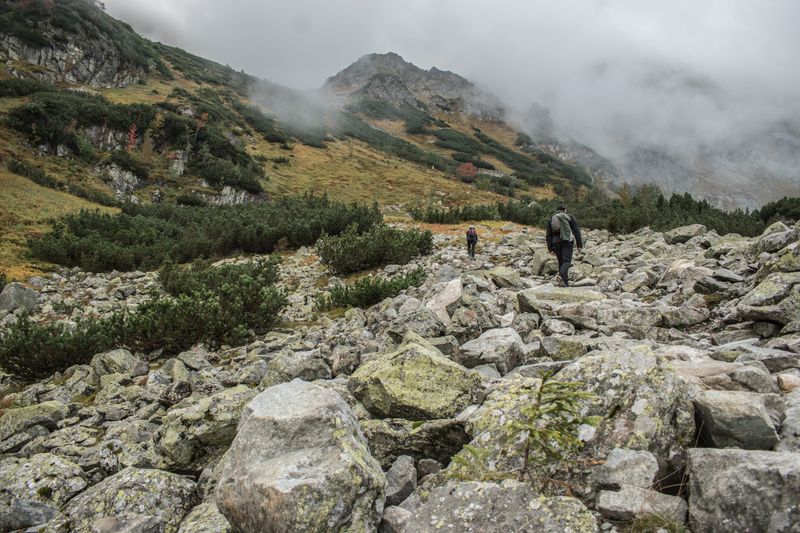
Loose rock is the surface that turns a short distance into a long hour. Reading it is a skill, and so is deciding not to cross it.
Trails & Routes
Mistakes cluster at the end of the day, and not because the ground is harder. Tired decision-making has a recognisable shape.
Trails & Routes
Reverse a walk you know well and the navigation, the gradients and even the view stop being familiar. It is the cheapest way to…
Trails & Routes
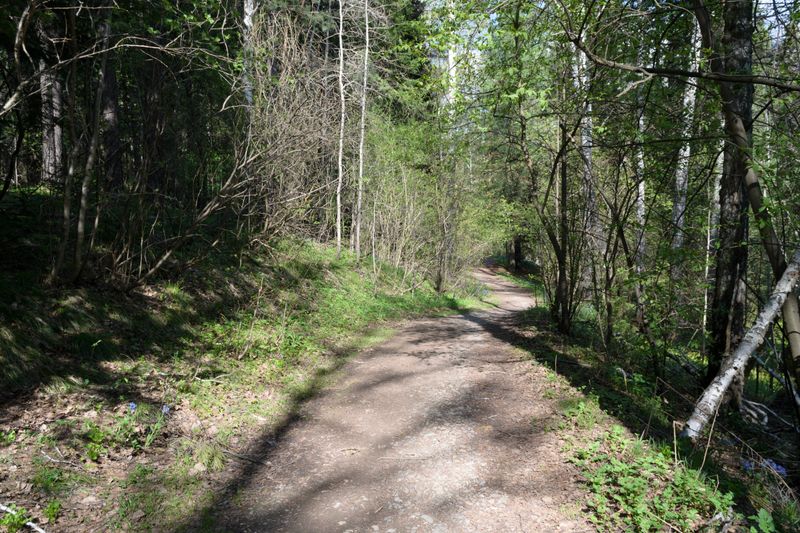
Nothing about walking in woodland is physically hard. Knowing where you are is another matter entirely, and the reasons are…