Trails & Routes
Gradient Is A Decision Somebody Made When The Path Was Built
The steepness of a constructed path reflects who it was built for and what they were carrying, which is why old working routes climb so differently from modern ones.

The gradient of a path is rarely accidental. It was chosen by whoever built it, for a specific traffic, and that choice is still legible centuries later.
Pack animals set a strict limit
Routes built for loaded horses or mules cannot exceed a modest gradient, because a laden animal loses efficiency sharply on steep ground and cannot recover it.
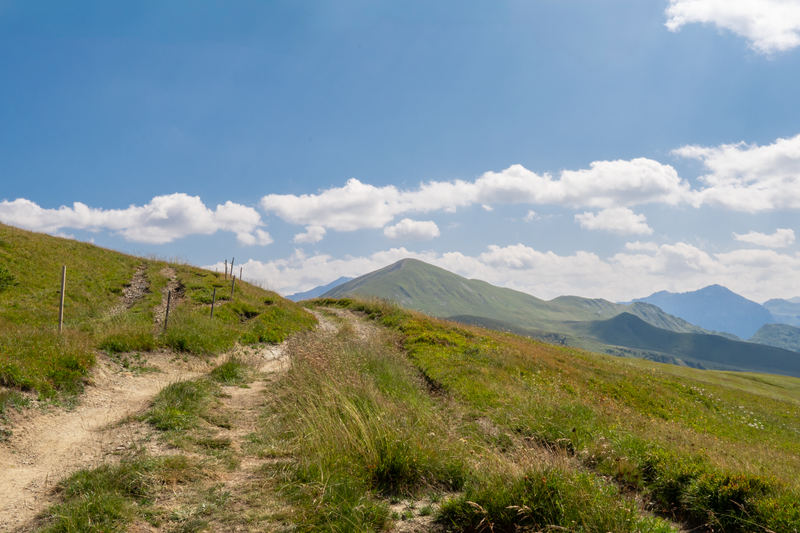
The result is a path that traverses patiently, uses long zigzags and holds a consistent angle, gaining height slowly across a wide section of hillside.
These routes are pleasant to walk for exactly the reason they were built that way, and they frequently take a longer line than any modern walker would choose.
Wheeled traffic is stricter still
Carts and later vehicles require gradients gentler again, and the engineering to achieve them, cut benches, retaining walls and embankments, is substantial.
Where such a route exists in the hills it usually served a mine, a quarry or a military purpose, since only those justified the construction cost.
The giveaway is consistency. A track holding the same gentle angle across varied ground for miles was surveyed and built rather than worn in by use.
Foot routes take the direct line
A path made by people walking to work goes where people wanted to go, which is usually straight up. Human legs manage steep ground better than any animal or vehicle.
These routes climb directly, use steps where necessary, and disregard the gradient limits that governed everything else. They are shorter and considerably harder.
Many hill paths in mining and quarrying districts are of this type, and their steepness reflects a daily commute rather than any consideration of the walker's comfort.
Modern recreational paths follow drainage logic
Paths built or rebuilt for walkers are laid out primarily to survive water, which means gradients are chosen to keep surface flow slow rather than to suit anyone's legs.
Where an old direct route has eroded, the repair frequently reinstates it on a different line entirely, which walkers sometimes read as an unnecessary diversion.
Stone pitching is the alternative where a direct line must be kept, building a stepped surface that resists water. It is extremely labour-intensive and is used where nothing else will hold.
Reading the gradient tells you the history
A path's angle, width and construction together indicate what used it. A consistent gentle traverse with revetment walls had animals or wheels on it; a direct stepped line had people.
This is why two paths up the same hillside can differ so completely. They were not alternatives offered to a walker but separate pieces of infrastructure built for unrelated purposes.
Questions readers ask
Do I need to break in modern boots?
Most trail shoes need little breaking in; your feet still need conditioning. Walk in the exact shoes and socks you will use, at the load you will carry.
Are double-layer socks worth it?
For people who blister reliably, often yes — they move the shear between the sock layers rather than against skin. They are warmer and bulkier, which suits some conditions and not others.
Also by Imogen Vasse
- Crofting, commons and the land nobody quite ownsPeople & Place
- Walking in heat is a different sport, and the rules are strictTrails & Routes
- Wild camping law varies enormously, and assumptions travel badlyTrails & Routes
- Pacing uphill: the conversation test beats any heart rate zoneTrails & Routes