Trails & Routes
Walking in heat is a different sport, and the rules are strict
Heat kills more walkers than cold in most of the world. The mitigations are unglamorous and they work.
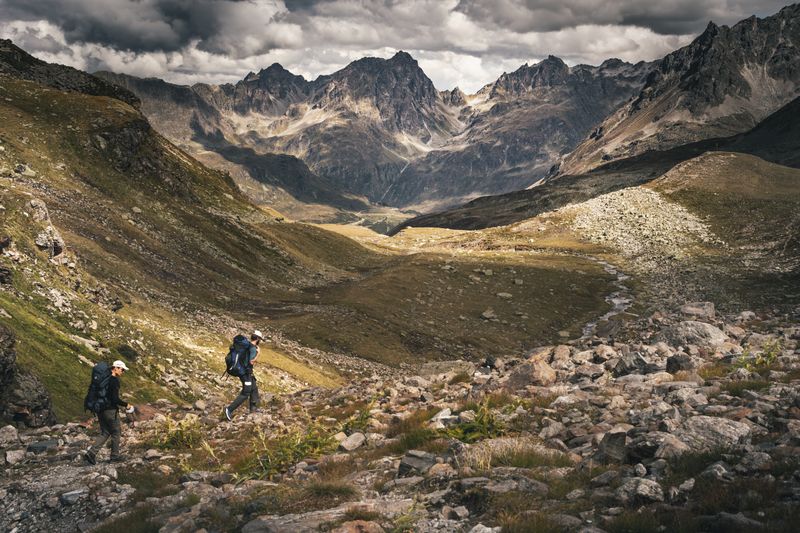
This looks at walking in heat from the practical end — what holds up once conditions stop being ideal.
What holds up in practice
- Start absurdly early — the heat of the day is not a challenge to be met.
- Water is a route-planning problem before it is a carrying problem.
- Electrolytes matter once sweat losses run past a couple of litres.
Heat exhaustion arrives before you notice it
The early signs are irritability, clumsiness and poor decision-making, which are exactly the faculties needed to recognise them. By the time somebody stops sweating, the situation has moved from uncomfortable to genuinely dangerous. This is why heat protocols are written as fixed rules rather than as judgement calls — the judgement is the first thing to go.
Walking parties should agree in advance who calls a stop, because in heat nobody wants to be the one who does.
The clock is the main tool
In hot regions the practical answer is to walk from first light until late morning, rest through the middle of the day, and continue in the evening. A 04:30 start feels excessive at home and entirely reasonable at 11:00 on an exposed slope.
Shade at midday is worth planning the whole day around, and on some routes it determines where you stop rather than distance. Where the heat is extreme the logical extension is to walk at night, which is standard on some desert routes and brings its own problems: navigation by torchlight, ground hazards you cannot see, and in many regions animals that are active precisely because it has cooled.
Water is a route problem
Carrying enough water for a full hot day is often impractical — sweat losses can exceed a litre an hour under load. Route planning therefore has to identify sources, confirm they are seasonal or perennial, and build the day around them.
Local information matters enormously here, because a spring marked on a map may have been dry for a decade. The rule that covers a dry source is to turn back while you still hold more than half of what you set out with, since the walk out is the same distance and will be hotter, and a party that spends its whole reserve reaching one marked spring has no plan at all if the spring is not there.
Electrolytes are not optional at volume
Replacing several litres of sweat with plain water dilutes blood sodium, which produces symptoms uncomfortably similar to dehydration. Salt tablets, electrolyte powders or simply salty food alongside water resolve this and cost almost nothing. The threshold where this starts to matter is roughly two to three litres of sweat loss, which is a normal hot morning.
Locally, concentration matters as much as content, because a strongly sugary drink leaves the stomach slowly and can leave you worse off in the short term, which is why rehydration solutions are made up dilute and to a stated volume rather than mixed to taste.
Clothing and skin
Loose, light, long-sleeved covering outperforms bare skin in strong sun, because it blocks radiation while allowing evaporation. A wide-brimmed hat does more than a cap, and a wetted neck cloth is genuinely effective while it stays damp. Sunburn on top of heat load is an additional thermal burden, not just a cosmetic problem.
All of that assumes dry heat, because evaporation is what does the cooling: in high humidity sweat runs off without evaporating, which is why a humid thirty degrees is more dangerous than a dry thirty-eight and why the wetted neck cloth stops working entirely.
Acclimatisation is physiological and takes about two weeks
Repeated heat exposure expands blood plasma volume within the first few days, which is what stops heart rate climbing at a given effort. Sweating then starts earlier and at a higher rate, and the sweat itself becomes more dilute as the body learns to conserve sodium. A fit walker arriving from a cool climate is therefore at more risk in week one than a less fit person who has been in the heat a month, which is the reverse of what most people assume.
The detail that matters: the adaptation also fades within a couple of weeks of returning to a cool climate, so last summer's acclimatisation is not banked for this one.
The takeaway
Set the alarm for the dark. Everything else about hot-weather walking follows from that.
Go slowly enough to notice, and most of this stops being advice and starts being obvious.
Questions readers ask
How much water should I carry?
Enough to reach the next confirmed source with a margin, which in hot conditions often means three to four litres between sources. Plan sources first, then carrying capacity.
Is it safe to walk in the middle of the day if I go slowly?
Slower helps, but radiant heat from ground and rock does not care about your pace. Shade and timing do far more than effort management.
Also by Imogen Vasse
- Crofting, commons and the land nobody quite ownsPeople & Place
- Blisters are a friction problem, not a toughness problemTrails & Routes
- Wild camping law varies enormously, and assumptions travel badlyTrails & Routes
- Pacing uphill: the conversation test beats any heart rate zoneTrails & Routes