Slow Travel
Cycling a route you would normally walk changes what you notice
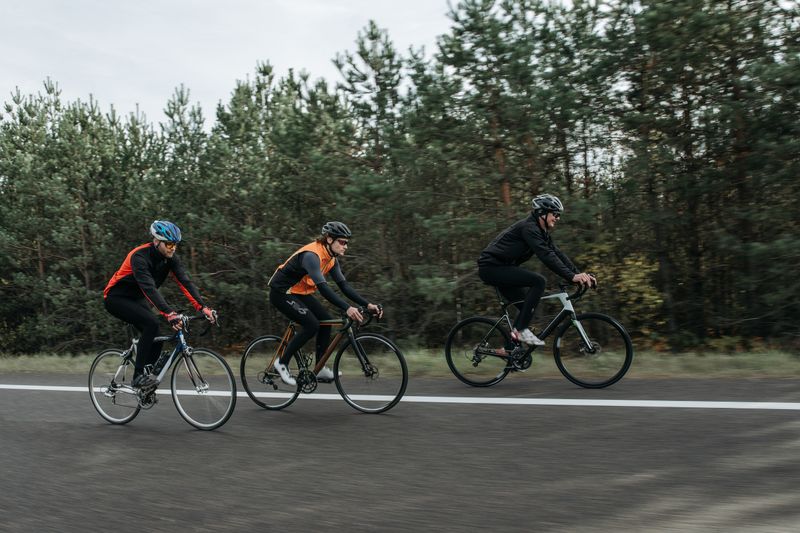
Riding sits between walking and driving in a way that suits some landscapes precisely and ruins others.
There is a short answer about travelling by bicycle and a useful one, and they are not the same. What follows is the useful one.
The short version
- Riding covers roughly three to four times a walking day for similar effort.
- You notice gradient and surface intensely and detail much less.
- Bicycles work best where distances between interesting things are awkward on foot.
Pace determines what registers
At walking speed, a landscape reveals texture: plants, ground conditions, small structures, sounds. At riding speed, that detail drops away and what replaces it is a strong physical sense of the shape of the land.
You know a valley's gradient profile after riding it in a way you never do after driving and rarely do after walking. Stopping is also cheap in a way it never is in a car, since a bicycle can be halted anywhere in a second and leant against a wall, so the number of things you actually get off and look at is closer to walking than to driving.
It suits the awkward middle distances
Landscapes where the interesting places are twenty to forty kilometres apart are frustrating on foot and trivial by car. That is precisely the range where a bicycle turns a logistical problem into the best day of a trip. River valleys, coastal plains, canal networks and rail trails are all built at roughly that scale.
Where it fails is steep, rough or pathless upland, because a loaded bicycle that has to be pushed or carried is a substantial burden, and a route with several such sections is both slower and far more tiring than simply walking the same line.
Surface matters more than distance
A rough track can halve your speed and triple the effort, and it does so without appearing on any elevation profile. Route planning by distance alone routinely produces days that take twice as long as expected.
Over a season, local mapping and recent user reports are worth more than any national dataset for this specific question. Tyre width and pressure do more than anything else to change what a surface costs you, and running wider tyres at lower pressure than road habit suggests converts a great deal of rough track from an ordeal into merely slow.
Luggage decisions are stricter than walking
Weight on a bicycle costs less on the flat and more on climbs, and it changes handling in a way a rucksack does not. Low-mounted panniers keep handling predictable; a heavy saddlebag or bar bag makes steering vague on descents. The practical limit is usually not weight but what you are willing to lift onto a train.
The other difference from walking is that a mechanical failure strands you, so a bicycle brings its own small obligation of tools, a spare tube and the ability to use both, because a broken chain twenty kilometres from a road is a very long walk pushing a heavy object.
Combining with trains is the real unlock
Regional rail with bicycle spaces converts a linear route into a network, allowing you to ride the good sections and skip the dull ones. Carriage rules vary enormously and reservations are compulsory on many long-distance services. Checking those rules before booking is the difference between a flexible trip and standing on a platform watching a train leave.
It also lets you choose the direction, which matters more on a bicycle than on foot: taking the train up the valley and riding back down it, or arranging the route so the prevailing wind is behind you, changes a day more than any amount of fitness does.
The exception is usually weather, which overrides most planning.
Where you may ride is not where you may walk
Access rights for bicycles are almost always narrower than the rights that apply to walkers, and the size of that gap differs sharply between countries. A public footpath in England and Wales carries no right to cycle while a bridleway does, Scotland's statutory access rights cover cycling on broadly the same terms as walking, and designated wilderness areas in the United States exclude bicycles outright. Waymarked long-distance walking routes therefore often cannot be ridden end to end even where the surface would take a bicycle easily, and working out the legal diversions is the real planning job.
Checking each section against national access law, rather than assuming that a path is a path, is what separates a tour from a series of arguments with landowners.
The takeaway
Ride the awkward gaps and walk the good bits. The combination beats either on its own.
The route rewards patience more than equipment.
Questions readers ask
Do I need a touring-specific bicycle?
No. Almost any reliable bicycle with sensible gearing and space for wider tyres will do a tour. Fit and gearing matter far more than frame category.
How far should I plan per day?
On mixed surfaces with luggage, sixty to eighty kilometres is a comfortable day for most people. Plan less on your first day than you think, and less again if the surface is unknown.