People & Place
What rangers actually do, and why the job is changing
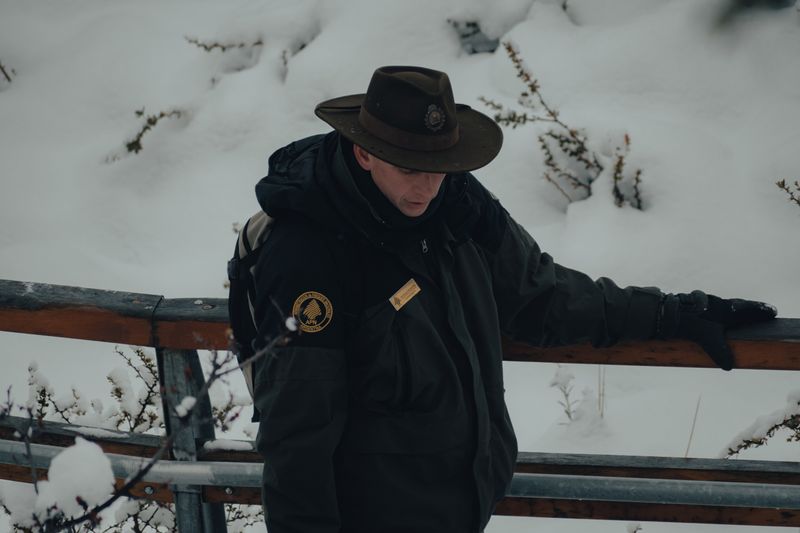
Ranger work has shifted from land management toward crowd management. The people doing it have opinions about that.
This works through ranger work in the order the parts actually depend on each other.
The short version
- Visitor numbers in popular protected areas have grown far faster than ranger headcount.
- The job has moved from habitat work toward information, enforcement and litter.
- Seasonal contracts make institutional knowledge difficult to retain.
The job description and the job are different documents
Ranger roles are typically written around habitat management, monitoring and infrastructure maintenance. In practice, in heavily visited areas, a large share of the working day goes on visitor contact, parking, waste and incident response.
That drift is rarely reflected in job titles, pay bands or the training offered. The practical consequence is a training gap: defusing an aggressive visitor, dealing with a fire on a hot weekend and unblocking a lane full of parked cars are now core skills, and almost nobody was recruited or trained for any of them.
Visitor pressure is concentrated, not general
Protected areas do not fill evenly; a small number of car parks, viewpoints and lake shores absorb most of the traffic. This means pressure can be extreme at three locations while the rest of a park sees almost nobody.
Management responses that treat a park as uniform therefore miss where the actual problem is. That concentration is sometimes deliberate, because providing good parking, hard paths and toilets at three sites is a recognised way of keeping pressure off the other ninety per cent, and the crowded honeypot is often the management success rather than the failure.
Enforcement is the least popular part
Most rangers describe themselves as educators rather than enforcers, and most prefer a conversation to a citation. But wild camping, fires and dogs around livestock generate genuine conflict, and the ranger is the person standing in it. Where enforcement powers are weak or unclear, the role becomes negotiation without leverage, which is exhausting in a way that does not show up in any report.
In practice, the approach rangers most often describe as working is contact before anything has happened — a conversation in the car park at four in the afternoon rather than an argument beside a fire at eleven at night — which also avoids the lone confrontation that is the part of the job people resign over.
Seasonal contracts cost more than they save
A large fraction of ranger work is seasonal, which suits peak visitor loads and suits nothing else. Knowledge about specific sites — where the ground is soft, which farmer to call, where the erosion started — leaves with each contract. Rebuilding that knowledge every spring is a real cost that does not appear in the staffing budget.
The detail that matters: volunteer ranger schemes fill part of the gap and arrive with their own version of the same problem, since volunteers are plentiful in July and scarce in February, which is when the ground actually needs the work done.
What the work actually achieves
Path maintenance, drainage and surfacing prevent far more erosion than any signage does, and it is the least visible part of the job. Monitoring data collected by rangers underpins most of what is known about condition trends in protected areas. The single highest-value activity by most accounts is simply presence: a visible ranger changes behaviour without anyone having to say anything.
On the ground, presence is also the hardest thing to defend on a spreadsheet, because a problem that did not happen leaves no record, which is why patrol time is usually the first item cut when a budget has to be justified against measurable outputs.
The exception is usually weather, which overrides most planning.
What visitors could usefully do differently
Arriving early or late, or on a weekday, moves you out of the pressure peak that causes most of the damage. Parking where you were meant to park removes an entire category of ranger workload. Asking a ranger about the place rather than about the toilets is, by universal report, the best part of their week.
Reporting what you saw is the other half, because a blocked cross-drain, a new fire ring or a dead animal in a burn all get dealt with far sooner when somebody sends a photograph and a location than when a ranger eventually walks past it.
The takeaway
The visible part of ranger work is talking to visitors. The part that keeps the landscape intact is drainage.
The route rewards patience more than equipment.
Questions readers ask
How do you become a ranger?
Routes vary by country, but most combine a land-management, ecology or countryside qualification with volunteer or seasonal experience. Practical skills — chainsaw, first aid, off-road driving — matter as much as the degree.
Do rangers have legal powers?
It depends entirely on the country and the designation. Some are warranted officers with enforcement powers; many have none at all and rely on persuasion and on calling someone who does.