Conservation
Nitrogen is the pollutant that changed the countryside quietly
Atmospheric nitrogen deposition fertilises everything, and the habitats that suffer are the ones defined by poverty.
Most explanations of nitrogen deposition stop at the point where it starts to matter. This one carries on.
The short version
- Many valued habitats depend on low-nutrient soils.
- Deposition comes from agriculture, traffic and industry and falls everywhere.
- It is invisible, cumulative and rarely features in public debate.
Poverty is the habitat
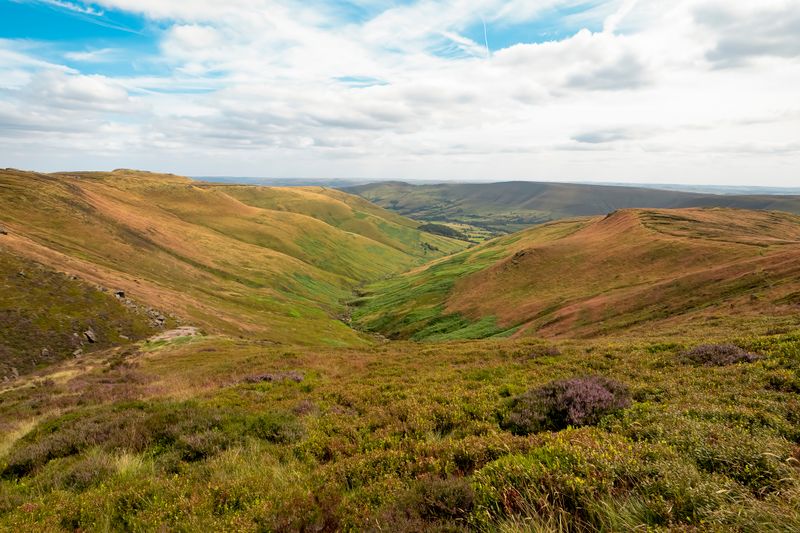
Heathland, chalk grassland, bog and dune grassland are all defined by low nutrient availability. Their characteristic species are those that tolerate poor soil and are out-competed where nutrients increase. Adding fertility does not enrich them; it converts them into rank grassland.
The mechanism is competition rather than poisoning, because a handful of fast-growing species can use the extra nitrogen and the rest cannot, so they grow taller, shade out the specialists, and diversity falls without anything being harmed directly.
The source is diffuse
Ammonia from livestock and slurry, nitrogen oxides from traffic and combustion, deposited by rain and directly onto surfaces. It falls across whole landscapes rather than at a point, which means a nature reserve cannot be protected by its boundary. Deposition rates in parts of Europe exceed the critical loads for these habitats by a wide margin.
In practice, a critical load is simply the deposition rate above which harm is expected for a given habitat, published per habitat type, and it is one of the few environmental figures anybody can look up and compare against their own local number.
The effects are slow and structural
Coarse grasses and scrub outgrow specialists, lichens decline, and the sward closes up. Because it happens over decades, the changed state becomes the baseline for anyone who did not see the original.
Over a season, this is a clear case of shifting baselines operating in plain sight. It acidifies as well, since the chemistry that follows deposition strips base cations from the soil and mobilises aluminium, so the change sits in the ground as much as in the sward and persists long after deposition falls.
Management can buy time
Grazing, cutting and removing the arisings exports nutrients and partially counteracts deposition. Turf stripping and sod cutting on heathland do the same more drastically.
None of these address the source; they manage the symptom at continuing cost. The arithmetic is unforgiving, because cutting and carting off a hay crop exports only a share of what deposition adds in the same year, so management slows the trajectory rather than reversing it and has to carry on indefinitely.
Reducing the source is agricultural policy
Ammonia emissions are dominated by livestock housing, manure storage and slurry spreading. Technical measures — covered stores, low-emission spreading, dietary changes — reduce them substantially and cost money. This is where the actual decision lies, and it is largely absent from public discussion of nature recovery.
Locally, there is a precedent worth citing, since sulphur emissions fell sharply across Europe within a couple of decades once policy addressed them and lichens returned to city trees as a result, which is the clearest demonstration that a diffuse air pollutant can in fact be dealt with.
Ammonia falls close to home; nitrogen oxides travel
Ammonia from livestock housing and slurry deposits heavily within a few hundred metres to a few kilometres of its source, so a single new intensive unit can push one adjacent site past its critical load on its own. Nitrogen oxides from traffic and combustion behave differently, staying airborne much longer and spreading a thinner load across a far wider area. That distinction is why planning applications for livestock units near designated sites are assessed with air-quality modelling, and why objections on those specific grounds sometimes succeed where general concern does not.
Over a season, it is also visible on the ground: the first row of trees along a busy road, or the verge beside an intensively farmed field, carries a measurably different lichen and plant community from the interior of the same site.
The takeaway
The habitats being lost are the ones that needed poor soil. We have been fertilising them from the air for decades.
What holds up over a week outdoors is rarely what looks best at the trailhead.
Questions readers ask
Can I see nitrogen damage?
Indirectly — a heath dominated by coarse grass rather than heather, or trees with few lichens near intensive agriculture, are typical signatures.
Does it affect gardens?
It affects semi-natural habitats defined by low fertility. Gardens are usually deliberately fertilised, so the effect is invisible there.