Conservation
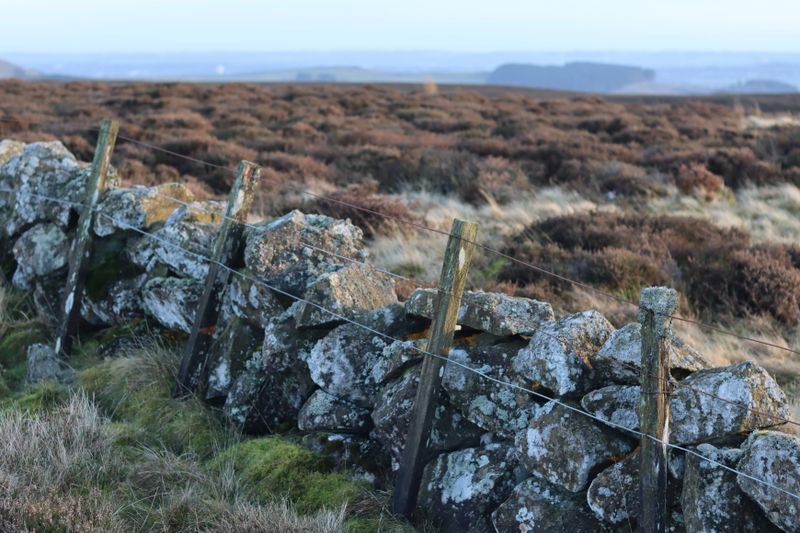
Hedgerows are linear woodland and are managed like fences
A hedge is habitat, corridor, carbon store and stock barrier at once, and how it is cut decides which.

This looks at hedgerows from the practical end — what holds up once conditions stop being ideal.
What holds up in practice
- Annual flailing removes the berries and blossom that make a hedge valuable.
- Cutting on a rotation of two or three years dramatically increases food supply.
- Hedge base and margin matter as much as the hedge itself.
A hedge does several jobs
It contains stock, marks a boundary, shelters crops, links habitats, stores carbon and feeds birds and invertebrates. Those functions pull in different directions, and management decides which are served.
Most hedgerow management historically optimised for the boundary function alone. The shelter function is measurable, since a permeable hedge slows the wind for a distance downwind of several times its own height, which cuts evaporation from a crop and matters to stock in a way a wire fence never does.
Cutting timing decides food supply
Blossom and berries form on second-year growth, so an annually flailed hedge produces almost neither. Cutting on a two or three-year rotation increases berry yield enormously for the same total work. Cutting later in winter leaves berries available through the hardest months for birds.
Cutting during the nesting season destroys nests outright and is restricted by law in a number of countries, which is why the working window is narrow and why a contractor booked for the wrong fortnight is a real problem rather than an inconvenience.
Shape matters
An A-shaped hedge, wider at the base, supports more nesting cover and more structural diversity than a flat-topped box. Incremental cutting that raises the height slightly each time avoids the cycle of hard cutting and thin regrowth. Laying and coppicing rejuvenate a hedge and are skilled, slow and increasingly rare.
Worth knowing before you go — laying is regional rather than generic, with distinct styles worked out for different stock, terrain and hedge species, and the local style is usually the one that produces a stockproof hedge with the least material wasted.
The base and margin are habitat too
The ground layer at the base of a hedge supports small mammals, invertebrates and the plants that feed them. Ploughing to the hedge, spraying to the base and cutting margins tight all remove that layer.
On the ground, a two-metre uncultivated margin transforms the value of the hedge beside it. The margin also intercepts fertiliser and spray drift before it reaches the hedge bottom, which is why a hedge with a strip beside it carries a completely different ground flora from one ploughed to within a foot of its stems.
Policy is moving
Agri-environment schemes in many countries now pay for rotational cutting, later cutting and margin retention. Hedgerow protection regulations restrict removal in several jurisdictions, with varying effectiveness. Hedgerow extent has stabilised in places after decades of loss, though condition remains the larger issue.
Locally, condition is judged on gappiness, height, width and how dense the base is, and it matters because a hedge can be present on every map, count towards every target, and still be a line of leggy stems that stops nothing and shelters nobody.
That varies by region, and it is worth checking locally.
The trees in the hedge are not being replaced
Mature hedgerow trees — the oaks, ashes and elms standing above the line — form a distinct and ageing cohort, and across large areas almost no new ones are coming through behind them. The mechanism is mundane: a flail cuts everything to the same height every year, so the sapling that would have become the next standard is removed long before anyone notices it was there.
Marking a few saplings per hedge with a stake and asking the contractor to cut around them is the whole intervention, and it costs the price of the stakes. Because a hedgerow oak takes well over a century to reach the size at which it carries most of its wildlife value, a few decades of uniform cutting leaves a gap that will still be visible two hundred years from now.
The takeaway
Cut less often and later. That single change does more than anything else available.
The route rewards patience more than equipment.
Questions readers ask
When should hedges be cut?
Late winter where possible, after birds have taken the berries and outside the nesting season. Nesting-season cutting is restricted in several countries.
Is a gappy hedge worth restoring?
Usually yes — laying, coppicing or planting up gaps restores the barrier and the habitat together, and is supported by grant schemes in many areas.