Conservation
Who pays for a national park, and what that buys
National park is a designation, not a funding model. What the label actually delivers varies enormously between countries.
Most explanations of national park funding stop at the point where it starts to matter. This one carries on.
The short version
- In many countries a national park designation does not transfer land ownership at all.
- Planning control, not ownership, is usually the main power a park authority holds.
- Visitor spending mostly bypasses the body responsible for managing the impact.
The label covers very different things
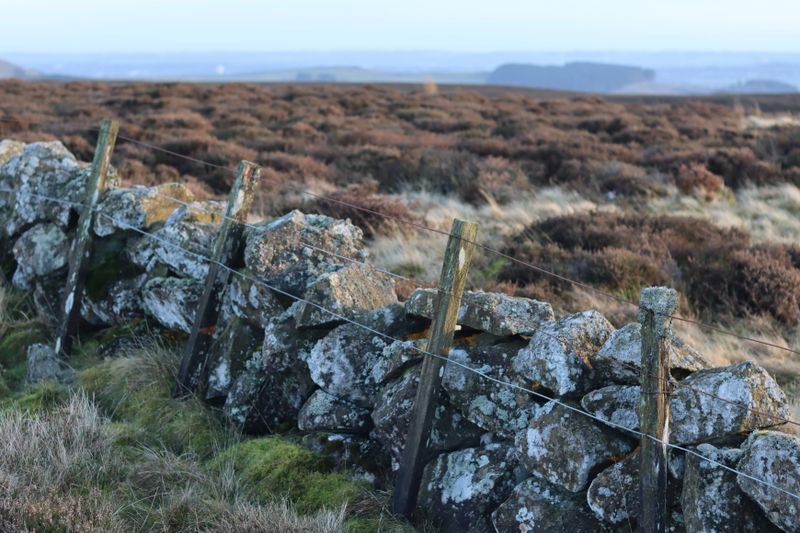
In parts of North America and Africa, a national park is state-owned land managed directly by a national agency. In much of Europe, particularly Britain, a national park is a designation laid over land that remains in private ownership and agricultural use. The two models produce completely different powers, budgets and conflicts, and comparing visitor experiences between them is misleading.
They do not even count visitors the same way, since a park entered through a gate has a number while a park with a hundred lanes crossing its boundary has an estimate, which makes international comparisons of visitor pressure close to meaningless.
Planning powers are the real lever
Where a park authority is the planning authority, it can shape development, design and land-use change across the whole designated area. That is a substantial power over the appearance and function of a landscape, exercised without owning any of it.
On the ground, it is also why park authorities spend a large share of their capacity on planning applications rather than on conservation. Those powers stop short of national infrastructure in most systems, so major roads, transmission lines, reservoirs and energy schemes are decided at a level above the authority, which is left as a consultee on the largest decisions affecting the land it exists to protect.
The money does not follow the visitors
Visitor spending goes to accommodation, fuel, food and retail, distributed across private businesses. The costs of visitors — paths, toilets, waste, rangers, car parks — fall on the park authority and the local council. That structural mismatch is why parking charges and visitor levies keep reappearing as proposals despite being unpopular.
Locally, in the state-ownership model some of it does return directly, through entrance fees and concession agreements with the businesses trading inside the boundary, which is the structural reason those parks argue about fee levels while European ones argue about car parks.
Core funding has generally fallen
Central government grants to park authorities in several European countries have declined in real terms over the last fifteen years. Authorities have responded by chasing project funding, which is short-term, competitive and rarely covers core staff.
The visible result is more time spent writing funding applications and less spent on the ground. The first casualties are the things no project will ever pay for: long-run monitoring series, ecological expertise held in-house, and the unglamorous maintenance that only becomes visible once several years of it have been skipped.
What designation reliably delivers
Consistent protection against the most damaging categories of development is the clearest and most durable benefit. A statutory management plan gives conservation objectives legal standing that they otherwise lack. What designation does not deliver, in most models, is control over farming practice, which is where most habitat change actually happens.
That is starting to shift where agricultural payments are targeted geographically, because an authority advising on which land management schemes get funded inside its boundary acquires by the back door the influence over farming that its designation never granted it.
The exception is usually weather, which overrides most planning.
The IUCN category tells you more than the name does
The IUCN classifies protected areas by management objective, running from strict nature reserves through national parks to protected landscapes where people live, farm and work. Many European parks, British ones included, sit in the protected landscape category rather than in the national park category proper, which is exactly why the experience differs so much from a North American park. The assigned category is published for each site and is the quickest way to find out whether extraction, grazing and permanent residence are expected before you form any expectations of the place.
Locally, it carries no legal force of its own — national law decides what actually happens on the ground — so treat it as a description of intent rather than a guarantee.
The takeaway
Ask who owns the land and who controls planning. Those two answers explain almost everything else.
Go slowly enough to notice, and most of this stops being advice and starts being obvious.
Questions readers ask
Do national parks stop development?
They constrain it. Most designations set a high bar for major development and shape the design of everything else, rather than prohibiting building outright.
Why do people live and farm inside national parks?
Because in the European model the designation was applied to working landscapes whose appearance is itself the thing being protected. The farming is part of what makes the park.