Conservation
Fences decide what a landscape is allowed to become
A line of posts and wire is the cheapest and bluntest conservation tool there is. It works exactly as well as its side effects allow.
The theory of conservation fencing is well covered elsewhere. This is about the version you meet in practice.
What holds up in practice
- A fence changes vegetation by changing which animals can reach it, not by doing anything to the plants.
- Excluded animals do not disappear; pressure moves to whatever lies outside the fence.
- Fences have a finite life and become a liability the moment maintenance stops.
What a fence actually does
A fence has no effect on soil, climate or seed supply; it changes only which animals can reach the vegetation inside it, and everything else follows from that. The effect can be dramatic, since an exclosure in heavily browsed country will often show tree regeneration within a few years where none was visible before.
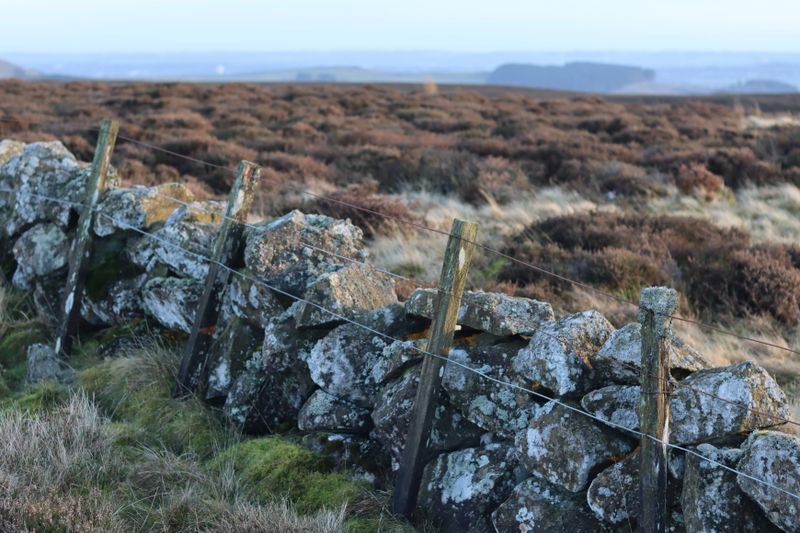
That contrast is used deliberately as evidence, because a fenced plot beside an unfenced one is one of the clearest demonstrations available in land management. It is also a partial demonstration, as an exclosure shows what would grow without browsing rather than what a functioning landscape with herbivores would look like. Reading a fence line honestly means asking both what changed inside and what is happening on the other side.
Deer fencing and the regeneration argument
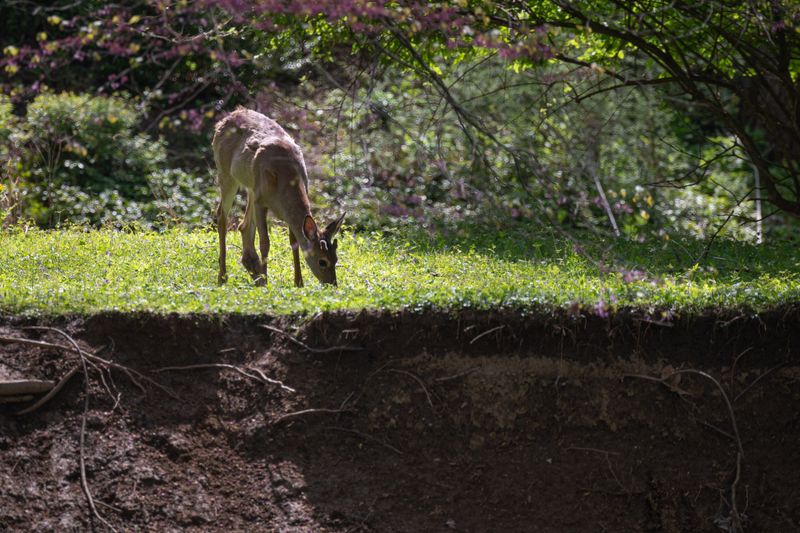
In landscapes with high deer numbers and no large predators, natural tree regeneration frequently fails, and fencing is the fastest available response. It is often the only option where culling is impractical, where ownership is fragmented, or where the objective is to establish woodland within a funding period. The criticism is that fencing treats a symptom, because deer numbers outside are unchanged and may increase as browsing concentrates on the remaining ground.
Advocates of culling argue for reducing the population instead, which addresses the cause and requires sustained effort, cost and public acceptance. In practice most large projects use both, with fencing protecting establishment while population management is negotiated across neighbouring landholdings.
The costs that are not on the invoice
Fences fragment the movement of animals that were never the target, and mammals which cannot jump or pass through are diverted along the line for long distances. Collisions with fence wires are a recognised cause of death for some woodland grouse species, which is why marking wires with visible material is common practice.
On the ground, a fence line concentrates predators and scavengers, because animals moving along a barrier are more predictable than animals moving freely. Snow drifts against fences, and in mountain areas a fence can create drifts that both damage the fence and alter the vegetation beneath them. None of this makes fencing wrong; it makes it a decision with a bill attached that is paid by species other than the one being managed.
Predator-proof fencing is a different animal
On islands and in some mainland reserves, fences are built to exclude introduced predators rather than herbivores, and the engineering is far more demanding. Such fences need buried skirts, overhangs, fine mesh and continuous inspection, because a single breach can undo years of work within a few nights. They have produced striking results for species that cannot survive alongside introduced mammals, particularly ground-nesting birds on islands.
They also create an obligation in perpetuity, since the enclosed population depends on the fence and on the funding that maintains it indefinitely.
Critics describe this as conservation by ark, and supporters answer that an ark is preferable to extinction while other solutions are developed.
Fences and people
A fence across open country affects walkers, and the interaction between fencing and access rights differs sharply between countries and even between regions. Well-designed schemes include gates and stiles at the points people actually cross, which requires knowing where those points are before the posts go in. Where that consultation does not happen, fences get climbed and damaged, and a damaged fence performs no function while still costing money.
Fencing also changes how a landscape looks and feels, and objections on those grounds are often dismissed as aesthetic when they concern the character of a place people value. Anyone encountering a new fence on familiar ground should check with the local land manager rather than assume anything about current access arrangements.
The end of a fence
Fences have a working life measured in a couple of decades at best, and the funding that built them rarely covers replacement. A failing fence is worse than no fence, because it still fragments movement and still catches animals while no longer excluding anything reliably.
Deciding when to remove one is genuinely difficult, since the woodland inside may not yet be tall enough to survive browsing when the wire comes down. The best schemes plan the exit at the start, with a date, a condition test and a budget for taking the material away rather than leaving it. Old wire left in the landscape is a persistent hazard to livestock and wildlife, and it is the most common evidence of a project that ended before its fence did.
The takeaway
Read both sides of a fence line. The story inside is only half of what the fence did.
What holds up over a week outdoors is rarely what looks best at the trailhead.
Questions readers ask
Does fencing solve a deer problem?
It protects the ground inside. The animals remain outside and the pressure there may rise. Most large projects pair fencing with population management.
Why are fence wires sometimes marked with tape?
To make them visible to low-flying woodland birds such as grouse species, for which collisions with unmarked wire are a recognised cause of death.
What happens when a conservation fence is not maintained?
It stops excluding reliably while still fragmenting movement, and abandoned wire becomes a long-term hazard to livestock and wildlife.