Gear & Craft
Where Weight Sits In A Pack Changes How Heavy It Feels
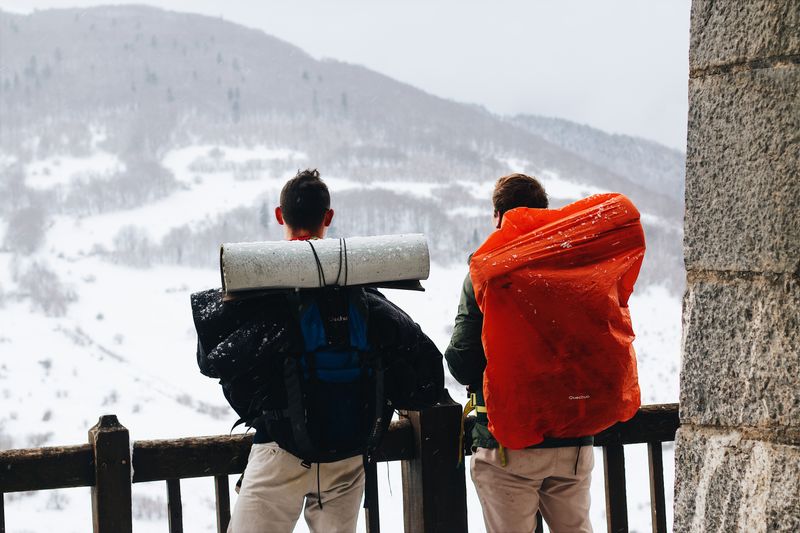
Two packs of identical mass can feel very different on the shoulders, because load position determines how much the body has to work to stay upright.

A loaded pack that feels punishing is often not too heavy but badly arranged. The position of the mass relative to the spine does more for perceived weight than removing a kilogram would.
The load wants to pull you backwards
Mass carried behind the spine creates a turning force. The body cancels it by leaning forward, and holding that lean is continuous muscular work in the lower back and hips.
The further from the spine the mass sits, the greater that force. A heavy item against the back panel is far cheaper to carry than the same item in the outer pocket.
This is why a compressed, close-packed load feels lighter than a bulky one of equal weight. Volume matters because volume pushes mass away from the body.
Height determines stability
Heavy items placed high in the pack sit near the shoulders and keep the walker upright, which suits smooth ground and a steady pace on a path.
The same arrangement raises the combined centre of mass, and on uneven ground the load then swings noticeably with each step, making balance harder and consuming energy.
Scrambling and rough terrain call for the opposite: weight lower and closer, accepting a slight forward lean in exchange for a load that does not argue with each movement.
Hips carry weight, shoulders steady it
The hip belt is a structural component, not a strap. Correctly positioned on the iliac crest, it transfers most of the load through the pelvis to the legs.
Shoulder straps then stop the pack tipping away from the back. If they are carrying substantial weight rather than controlling position, the belt is wrongly placed or the pack is the wrong length.
Torso length, not chest size or height, determines whether that transfer can happen. A pack sized to the wrong back length cannot be adjusted into working correctly.
Symmetry is not optional
A load heavier on one side forces continuous compensation through one hip and one shoulder. The asymmetry is easy to miss and shows up as pain after several hours rather than immediately.
Water is the usual culprit, because it is dense and often carried in a single side pocket. Splitting it or moving it centrally is one of the cheapest adjustments available.
Packing symmetrically also matters for balance on steep ground, where an unbalanced load reveals itself at exactly the moment stability is most valuable.
Access forces compromise
The ideal position for the heaviest item is usually the least convenient. A perfectly loaded pack that has to be emptied to reach a waterproof will be repacked badly by lunchtime.
The workable arrangement puts frequently needed items where they can be reached and accepts a small penalty in load position, rather than a theoretical optimum nobody maintains.
Questions readers ask
Why did my torch come back to life in my pocket?
Cold raised the cell's internal resistance and its voltage sagged under load. Warming it restored the reaction rate, and the charge that appeared to be gone became usable again.
Which batteries are best for winter?
Lithium primary cells generally outperform alkaline in cold. Rechargeable lithium-ion works but loses runtime and should not be charged below freezing.
How should I store batteries between trips?
Cool, dry and out of the device. Lithium-ion keeps better at partial charge than full, and alkaline cells left in equipment can leak and destroy it.