Gear & Craft
Why the same tent is excellent in one country and useless in another
Tent design is a set of compromises made for a specific climate. Buying the wrong compromise is the most expensive gear mistake there is.
The points below about tent design are ordered by how much difference they make, not by how often they get repeated.
What matters most
- Double-wall tents manage condensation; single-wall tents manage weight.
- Inner-first pitching is a liability in persistent rain.
- Pole geometry, not fabric, determines how a tent behaves in wind.
Condensation is the defining problem in maritime climates
A sleeping person releases a substantial amount of moisture overnight, and in humid air it condenses on the coldest surface available. A double-wall tent puts that surface on the outer fly, where it runs off, rather than on the inner where it drips. In dry continental air, condensation is a minor issue and a single-wall tent saves real weight; in Scotland or New Zealand it is the whole problem.
Ventilation works by convection rather than by opening one door, so a tent needs a low inlet and a high outlet before air moves through it at all, and sealing everything up against a cold night is what produces the wettest mornings.
Pitching order decides whether you sleep dry
A tent that pitches inner-first requires you to expose the inner to rain while you put the fly over it. Fly-first or all-in-one pitching keeps the inner dry through the process, which is a routine requirement in wet climates and irrelevant in dry ones.
This single design choice explains most of the difference between tents sold in North America and tents sold in northern Europe. It matters just as much when striking camp, because the same design lets you pack a dry inner before the fly comes off, and carrying the wet fly in a bag of its own keeps the rest of the pack from taking on that water.
Wind performance comes from geometry
A low profile, short pole spans and multiple crossing points produce a structure that deforms and recovers rather than failing. Tunnel tents are extremely strong pitched end-on to the wind and poor pitched side-on, which puts the burden on the person choosing the site.
The detail that matters: geodesic designs are heavier and free-standing and handle wind from any direction, which is why they dominate above the treeline. Most wind failures are under-guyed rather than under-built, because a tent using half of its guy points has a fraction of its designed strength, and pegs driven at the wrong angle to the line pull out under a load the same peg would otherwise hold.
Fabric numbers mislead
Hydrostatic head figures describe resistance to water pressure and correlate only loosely with whether a tent keeps you dry over a week. Seam sealing, floor design, fly coverage and pitch tension matter more in practice than the headline waterproof rating.
Silnylon stretches when wet and needs retensioning overnight; polyester does not, which is why it dominates in wet-climate designs. Ultraviolet light is the number nobody prints, since sustained sunlight degrades tent fabric measurably and a shelter left pitched through a whole season on an exposed site can tear in a wind it would have shrugged off when new.
Weight is bought from somewhere specific
Every gram saved comes from fabric thickness, pole diameter, coverage, or internal space, and it is worth knowing which. An ultralight shelter is an excellent tool in stable conditions and a poor one when weather pins you down for a day. The question is not how light a tent is but which conditions it stops being appropriate for.
Locally, internal space is usually the first thing sacrificed and the thing that matters most on the day weather keeps you inside it, which is also the argument for splitting a slightly heavier tent between two people rather than each carrying a minimal one.
The exception is usually weather, which overrides most planning.
Site selection outperforms specification
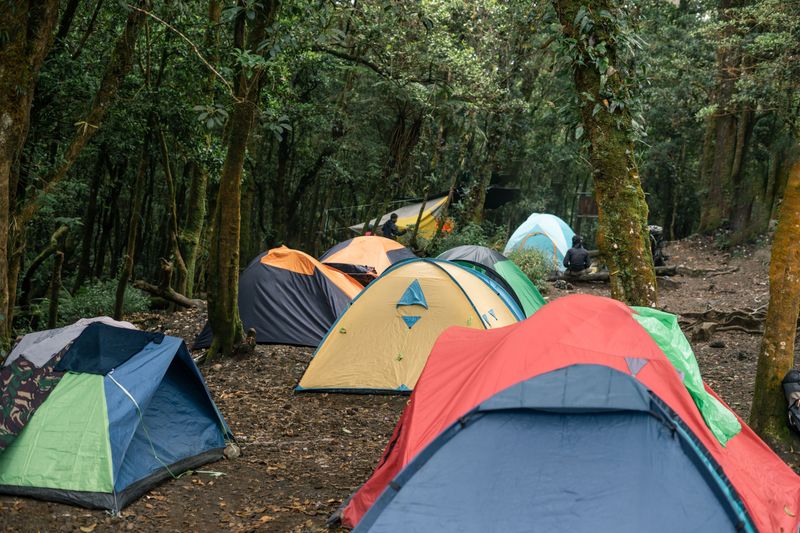
Ten minutes spent finding shelter behind a bank, a wall or trees does more for a night than several hundred grams of pole. Avoiding hollows, watercourses and the lee of anything that will drip are basic and routinely skipped. The best tent pitched badly is worse than a mediocre tent pitched with care.
Orientation is the free part of it: putting the lowest profile into the wind and the door in the lee costs nothing at pitching time and decides whether the night is spent listening to fabric or to weather going past outside.
Everything above, in order of what to do first
- Condensation is the defining problem in maritime climates. A sleeping person releases a substantial amount of moisture overnight, and in humid air it condenses on the coldest surface available.
- Pitching order decides whether you sleep dry. A tent that pitches inner-first requires you to expose the inner to rain while you put the fly over it.
- Wind performance comes from geometry. A low profile, short pole spans and multiple crossing points produce a structure that deforms and recovers rather than failing.
- Fabric numbers mislead. Hydrostatic head figures describe resistance to water pressure and correlate only loosely with whether a tent keeps you dry over a week.
- Weight is bought from somewhere specific. Every gram saved comes from fabric thickness, pole diameter, coverage, or internal space, and it is worth knowing which.
- Site selection outperforms specification. Ten minutes spent finding shelter behind a bank, a wall or trees does more for a night than several hundred grams of pole.
The takeaway
Buy for the wettest, windiest week you expect, then pitch carefully anyway.
The route rewards patience more than equipment.
Questions readers ask
Is a footprint worth carrying?
For a tent with a thin floor, on abrasive ground, yes. For most modern floors on grass it is weight you could spend elsewhere. It also helps when packing away a wet tent.
How do I stop condensation entirely?
You cannot. You can reduce it by ventilating aggressively, pitching away from water and avoiding hollows, and you can manage it by choosing a design where it forms on a surface you never touch.