Gear & Craft
Packs fit or they do not, and the number on the label is not the fit
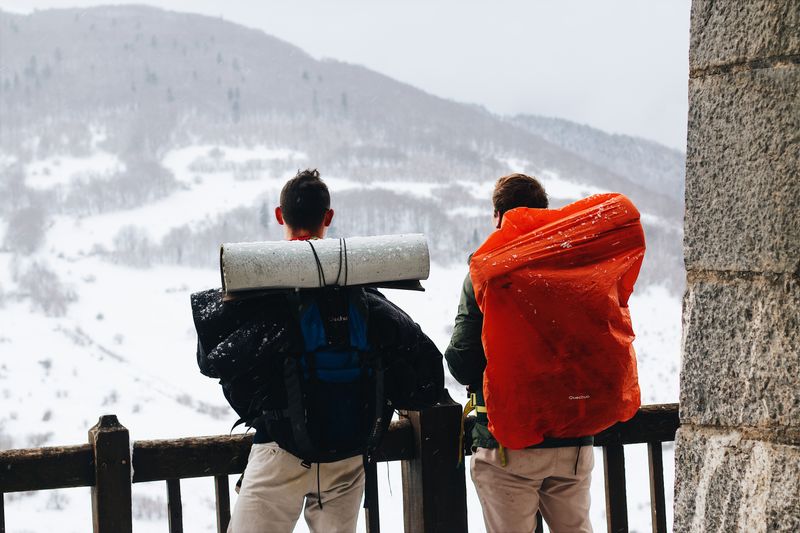
Load carriage is a hip problem, and a pack that does not match your back length transfers it to your shoulders.

The points below about fitting a rucksack are ordered by how much difference they make, not by how often they get repeated.
What matters most
- Most of the load should sit on the hips, not the shoulders.
- Back length, not height, determines pack size.
- Volume is a capacity figure and says nothing about fit.
The hips carry the weight
A correctly fitted pack transfers the large majority of the load through the hip belt onto the pelvis. Shoulder straps stabilise and should carry comparatively little. Shoulder pain after a day out is almost always a fit problem rather than a strength problem.
The belt has to sit on the iliac crest rather than around the waist, so that the padding wraps the top of the pelvis and the load rests on bone, and a belt worn an inch too low simply squeezes the abdomen and transfers nothing at all.
Back length is the measurement
Pack sizing is based on the distance from the seventh cervical vertebra to the top of the pelvis, not on overall height. Two people of the same height can require different pack sizes, and many packs offer adjustable or interchangeable harnesses. Getting measured properly is a ten-minute job in a shop and is the single most useful thing before buying.
Worth knowing before you go — harnesses cut for different body shapes are a fit matter rather than a marketing one, since a hip belt shaped for a different pelvis angle and shoulder straps set at a different width change how a load sits far more than the pack around them does.
Fit it loaded
A pack fitted empty tells you almost nothing, because the shape and load path change entirely under weight. Any competent retailer will load a pack with fifteen kilos for fitting, and it should be insisted on. Walking around the shop for ten minutes reveals problems that standing still does not.
How the test weight is loaded matters as well, because a sandbag lying in the bottom of the pack hangs off the shoulders and tells you very little about how the same weight will feel packed properly against your back.
The adjustment sequence
Hip belt first, centred on the iliac crest and tightened firmly; then shoulder straps snug but not load-bearing; then load lifters at roughly forty-five degrees; then sternum strap last. Doing it in another order produces a pack that never sits right regardless of how much it is fiddled with.
The detail that matters: re-tightening the hip belt through the day is normal as clothing compresses. Load lifters only do anything on a pack whose frame rises above the shoulders, so on a small daypack those straps are decorative and hauling on them simply drags the pack down onto the shoulders they were meant to relieve.
Packing affects carrying
Heavy items close to the back and at roughly shoulder-blade height keep the centre of mass over the hips. Weight low and away from the back pulls you backwards and is the usual cause of a pack that feels heavier than it is. A compressed, stable load is easier to carry than a loose one of the same weight.
Worth knowing before you go — access is the other half of packing, because anything wanted without stopping — waterproofs, food, map, hat — has to be reachable at the top or in a pocket, and a pack that must be emptied in the rain to find a jacket is packed wrong however well it carries.
The exception is usually weather, which overrides most planning.
Numb hands, and the ceiling on a frameless pack
Tingling or numb fingers under a pack usually means the shoulder straps are compressing nerves where they pass over the collarbone, which indicates the hip belt has stopped taking the load rather than that the shoulders are weak. Loosening the shoulder straps and re-seating the belt on the iliac crest normally clears it within minutes, and numbness that persists after a trip is worth raising with a doctor rather than walking through. Frameless and minimally framed packs have a load ceiling — often somewhere around eight to ten kilograms, depending on design and how tightly the pack is stuffed — above which there is nothing rigid to transfer weight to the belt and it all arrives on the shoulders.
That is why an ultralight pack borrowed for a trip with heavier kit can feel far worse than a heavier pack, and why the pack is the last item to choose rather than the first.
Everything above, in order of what to do first
- The hips carry the weight. A correctly fitted pack transfers the large majority of the load through the hip belt onto the pelvis.
- Back length is the measurement. Pack sizing is based on the distance from the seventh cervical vertebra to the top of the pelvis, not on overall height.
- Fit it loaded. A pack fitted empty tells you almost nothing, because the shape and load path change entirely under weight.
- The adjustment sequence. Hip belt first, centred on the iliac crest and tightened firmly; then shoulder straps snug but not load-bearing; then load lifters at roughly forty-five degrees; then sternum strap last.
- Packing affects carrying. Heavy items close to the back and at roughly shoulder-blade height keep the centre of mass over the hips.
- Numb hands, and the ceiling on a frameless pack. Tingling or numb fingers under a pack usually means the shoulder straps are compressing nerves where they pass over the collarbone, which indicates the hip belt has stopped taking the load rather than that the shoulders are weak.
The takeaway
Get measured, fit it loaded, and tighten the hip belt first every time.
The route rewards patience more than equipment.
Questions readers ask
What capacity do I need?
It depends entirely on trip length and kit bulk. Choose fit first and capacity second — an ill-fitting pack of the right volume is worse than the reverse.
Should the shoulder straps be tight?
Snug, not load-bearing. If they are taking the weight, the hip belt is too loose or the back length is wrong.