Conservation
Upland burning is the most contested land management in Britain
Rotational burning of heather has defenders and critics with genuinely different evidence, and the ground beneath is peat.
The points below about upland burning are ordered by how much difference they make, not by how often they get repeated.
What matters most
- Rotational burning maintains young heather for grouse and grazing.
- Burning over deep peat is now restricted in several jurisdictions.
- The evidence differs sharply depending on what is measured.
What burning is for
Rotational burning of heather produces a mosaic of young shoots for food and older stands for cover. It supports red grouse densities high enough to sustain driven shooting, and also provides grazing for sheep. The practice is old, deliberate and shapes the appearance of large areas of British upland.
It is a regulated activity rather than a free one, confined to a defined season and governed by codes specifying wind, ground wetness and fire-break preparation, because a cool controlled burn and an escaped fire are separated by exactly those conditions.
The peat argument
Much heather moorland sits on deep peat, which stores enormous quantities of carbon. Critics argue burning dries the peat surface, releases carbon and damages sphagnum, reducing the bog's capacity to form new peat. Several jurisdictions have restricted burning on deep peat specifically, which is where the scientific consensus is strongest.
The threshold depth is where much of the dispute now sits, since peat depth varies across a single moor and is established by probing on a grid, so whether a particular burn is lawful can turn on a survey somebody has to pay for and somebody else can contest.
What the defenders argue
Practitioners argue that cool, controlled burns remove fuel and reduce the risk of catastrophic wildfire, which damages peat far more. They also point to wader populations that are higher on managed moors, partly through predator control.
Both of those claims have supporting evidence and are contested in scope rather than in principle. Cutting is the alternative most often put forward, and it removes the fire while introducing its own problems, because machinery compacts wet ground, the cut material has to go somewhere, and steep or rocky moor cannot be worked at all.
Why the evidence conflicts
Studies differ in what they measure — carbon flux, water table, sphagnum cover, bird abundance, wildfire severity — and reach different conclusions accordingly. They also differ in burn intensity, peat depth and time since burning, which are the variables that matter most.
In practice, reading a headline about burning without knowing which of these was measured is close to useless. Experimental design is part of it as well, because burning cannot be randomly assigned to moors, so most of the evidence compares places that already differed in soil, rainfall and management history, and separating the burn from everything else is genuinely difficult.
Where it is heading
Regulation is tightening on deep peat while permitting continued management on shallower ground. Restoration of blocked drains and sphagnum reintroduction is proceeding on many estates alongside continued management. The argument about driven grouse shooting itself is a separate social question that frequently gets tangled with the ecology.
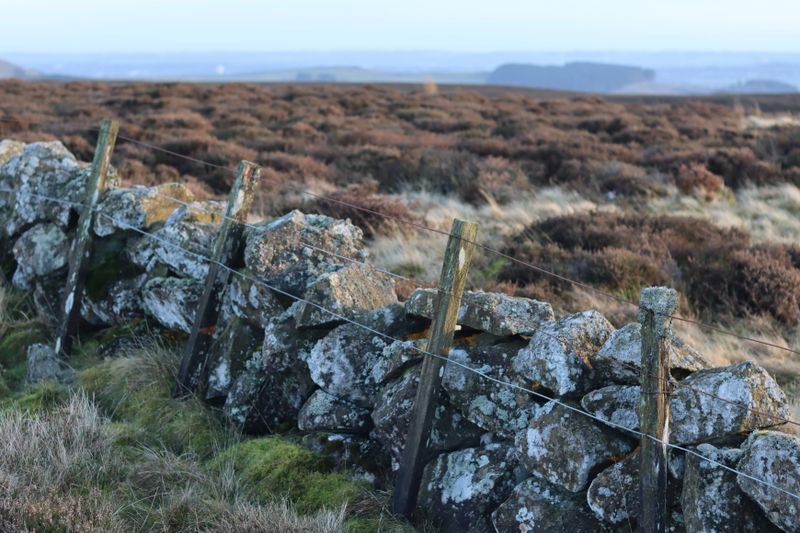
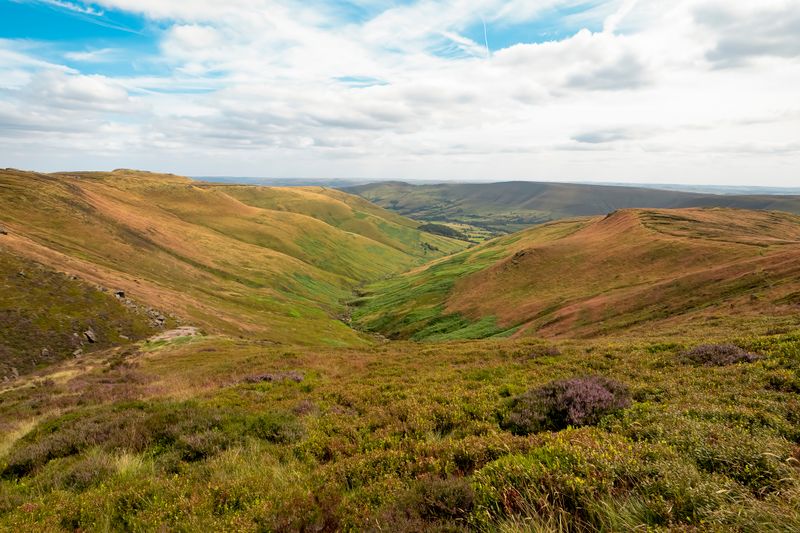
Locally, on the ground the whole argument is legible, since the stripe pattern of recent burns, the older heather between them and the straight lines of historic drainage grips cutting across both together record what has been done to a moor over the last half century.
That varies by region, and it is worth checking locally.
What a peat fire actually does
A wildfire on dry moorland burns the vegetation in minutes, but where the peat beneath has dried out the fire descends into it and burns underground, sometimes for weeks and sometimes through a winter. Underground fires are difficult to extinguish because water runs off the surface rather than reaching the smouldering layer, and they destroy carbon that took millennia to accumulate along with the seed bank and the fungal layer.
That is the risk both sides of the burning argument are ultimately talking about, which is why the state of the water table matters more to fire behaviour than the amount of heather standing above it. For visitors the practical consequences are narrow and absolute: disposable barbecues and campfires do not belong on peat in any weather, and a fire seen smoking on a moor should be reported immediately rather than assessed from a distance.
Everything above, in order of what to do first
- What burning is for. Rotational burning of heather produces a mosaic of young shoots for food and older stands for cover.
- The peat argument. Much heather moorland sits on deep peat, which stores enormous quantities of carbon.
- What the defenders argue. Practitioners argue that cool, controlled burns remove fuel and reduce the risk of catastrophic wildfire, which damages peat far more.
- Why the evidence conflicts. Studies differ in what they measure — carbon flux, water table, sphagnum cover, bird abundance, wildfire severity — and reach different conclusions accordingly.
- Where it is heading. Regulation is tightening on deep peat while permitting continued management on shallower ground.
- What a peat fire actually does. A wildfire on dry moorland burns the vegetation in minutes, but where the peat beneath has dried out the fire descends into it and burns underground, sometimes for weeks and sometimes through a winter.
The takeaway
Ask what was measured, on what peat depth, and how long after the burn.
The route rewards patience more than equipment.
Questions readers ask
Is burning always bad for peat?
The evidence is strongest against burning on deep peat. On shallower mineral soils the case is considerably less clear-cut.
Does managed moorland help wading birds?
Wader densities are often higher on keepered moors, substantially because of predator control. Disentangling that from burning specifically is the difficulty.