People & Place
The people who arrive for the season and leave with it
Mountain villages and coastal towns run on workers who appear when visitors do. The arrangement shapes housing, wages and what a place becomes.

The options around seasonal work in visitor places are set out side by side below, with the conditions that genuinely favour one over the other.
The difference in one place
- Visitor economies concentrate employment into short intense periods with long gaps between them.
- Seasonal staff compete for the same scarce housing that short-term letting has already tightened.
- Longer seasons are better for workers financially and harder on the places they work in.
What the work actually is
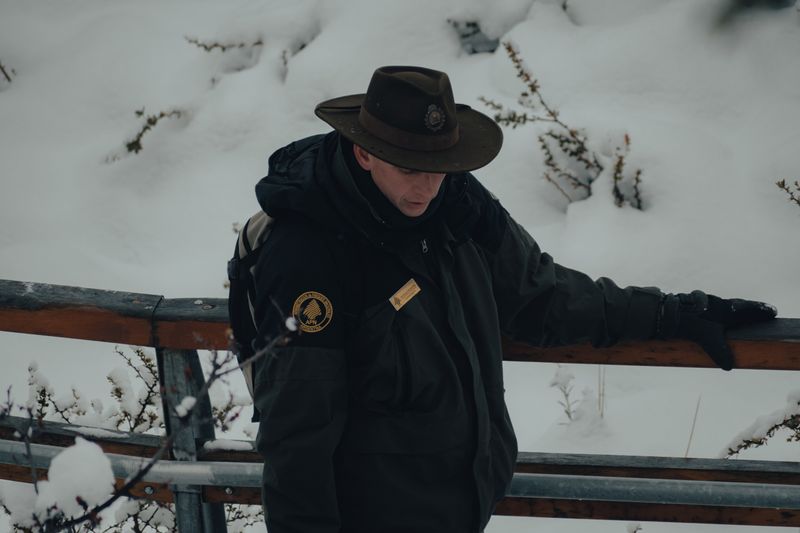
Behind the guide, the ranger and the hut warden sits a much larger workforce of kitchen staff, cleaners, lift operators, drivers, bar staff and shop workers. These jobs are the reason a valley can host many times its resident population for part of the year without the place falling over entirely. They are also structurally short-term, since the demand appears with the snow or with the summer and disappears again when it does.
Many of the workers are young and mobile, some follow opposite seasons between hemispheres, and others are local people stitching several roles into a single year. The visible tourist economy therefore rests on an invisible labour market that is renewed almost entirely every few months.
Housing is the binding constraint
A seasonal worker needs somewhere to live for exactly the period when accommodation in that place is most valuable to somebody else. The result is that staff housing competes directly with the visitor letting that generated the demand for staff in the first place.
Employers in many resorts respond by providing beds themselves, which solves the immediate problem and ties the worker's housing to their job. That link makes leaving a bad employer harder, which is a long-documented weakness of tied accommodation in any industry, not only in tourism. Where employers do not provide housing, workers commute increasing distances, and the wage has to absorb a travel cost the job was never priced for.
The shape of a seasonal year
Income arrives in bursts and expenses do not, so a seasonal worker is effectively saving during the season in order to fund the gap that follows it. The gaps between seasons are when maintenance, training and rest happen, and they are also when many people leave the industry for good. Two-season places with both winter and summer trade offer more continuous work, but they leave very little slack for the infrastructure or for the residents.
On the ground, single-season places have a long quiet period that residents often value and businesses cannot afford, which is a tension running through every such community. Anyone visiting in the shoulder weeks is seeing this directly: a half-open town is not neglected, it is between shifts.
What visitors do not see
The staff who make a mountain hut work often walk in on the same paths as the guests and then stay for weeks at a time without going down. Supply logistics, water systems, waste removal and long shifts make up the bulk of the job, and the scenery becomes background scenery remarkably quickly. Language is a constant undercurrent, since many seasonal workforces are international and the working language is rarely everybody's first one.
The relationship with permanent residents varies from close to distant, and it tends to be warmest where the same people come back year after year.
A guest who asks a member of staff where they are from will get a more interesting answer than expected a surprising proportion of the time.
Wages, tips and what the numbers hide
Headline pay in seasonal work often includes accommodation or meals, which makes comparison with other jobs difficult and can obscure the real hourly rate. Tipping cultures differ sharply between countries, and in some places a large share of take-home pay depends on customs a visitor may not know about. Overtime during peak weeks is normal and often unavoidable, since the work simply has to be done while the guests are actually there.
Worth knowing before you go — employment law, minimum wage rules and seasonal worker permits vary between countries and change regularly, so nothing general can be assumed about entitlements. What is consistent everywhere is that the busiest weeks are the ones where labour is scarcest and the pressure on the people working is highest.
None of this is uniform across a country the size of most of these.
What changes when the season changes
Where snow becomes less reliable, winter work contracts and businesses push to lengthen the summer, which shifts the entire employment pattern of a valley. Longer or doubled seasons raise annual income for workers and raise pressure on water supply, waste systems and the tolerance of the people who live there. Communities that have gone through this describe the same trade-off: more money circulating, and less of the year that belongs to residents.
Some places respond by regulating short-term letting or by building dedicated staff accommodation, and the results depend heavily on local politics and land ownership. For a visitor the useful habit is simply to notice that the person serving you may be housed by their employer and unable to stay once the season ends.
Side by side
| Consideration | What it means in practice |
|---|---|
| What the work actually is | Visitor economies concentrate employment into short intense periods with long gaps between them. |
| Housing is the binding constraint | Seasonal staff compete for the same scarce housing that short-term letting has already tightened. |
| The shape of a seasonal year | Longer seasons are better for workers financially and harder on the places they work in. |
The takeaway
The person handing you a key in a mountain village may have arrived six weeks ago, and will leave when you stop coming.
The route rewards patience more than equipment.
Questions readers ask
Why is staff housing such a problem in tourist towns?
Because workers need housing in exactly the place and period where letting to visitors pays more. Without intervention the market allocates those beds to visitors.
Is seasonal work badly paid?
It varies by country, sector and employer. Comparisons are complicated by accommodation, meals and tipping, which are often part of the package rather than the wage.
What does a longer season mean for a mountain village?
More continuous income and more continuous pressure. Water, waste and housing systems sized for a peak get less recovery time between peaks.