People & Place
The economics of a mountain hut
A building at two thousand metres with no road runs on helicopter deliveries, volunteer labour and a very short season.

This is less a set of instructions about running a mountain hut than an argument, and it is worth saying so at the start.
The argument in brief
- Everything arrives by helicopter, cableway or on foot.
- The operating season can be as short as three months.
- Club membership subsidies are what keep prices accessible.
Logistics dominate the cost
Food, fuel, gas and building materials arrive by helicopter or goods cableway at substantial cost per kilogram. Waste largely leaves the same way, because there is nowhere for it to go.
This is why a hut meal costs more than a valley one and why portions are calorie-dense rather than elaborate. It explains the pricing inside as well, where bottled water can cost more than beer because both were flown up and only one of them can be replaced from a spring, and why guests are asked to carry their own rubbish back down.
The season is short
A high hut may open for ten to fourteen weeks, during which it must earn the year's revenue. Bad weather in that window is not recoverable, and a poor summer has real consequences for maintenance budgets. Some huts open briefly in winter for ski touring, which is a different and smaller trade.
Over a season, the staff are hired for the season and live in, so a poor summer is a personal problem as much as a commercial one, which is why the same faces reappear year after year in the huts that manage to pay properly.
Water and power are engineering problems
Water is usually piped from a spring or melted, and freezes; power comes from solar, micro-hydro or a generator. Sewage treatment at altitude in cold is genuinely difficult and is one of the largest capital costs.
This is why some huts restrict washing and why showers, where they exist, are charged. For a guest it means treating water as a rationed supply rather than a service, because everything going down a drain at that altitude has to be treated on site or carried off it, and a tap left running is a direct cost to the building.
Alpine clubs subsidise access
Many huts are owned by alpine clubs and run for members at reduced rates, funded by membership and volunteer effort. Reciprocal agreements mean membership of one club gives reduced rates across several countries. For anyone spending more than a few nights in huts, membership repays itself immediately.
Locally, the card has to be carried and shown, since the reduction applies to the bed rather than the meal and is not granted retrospectively, so a member without proof pays the full rate however genuine the membership.
The warden's season
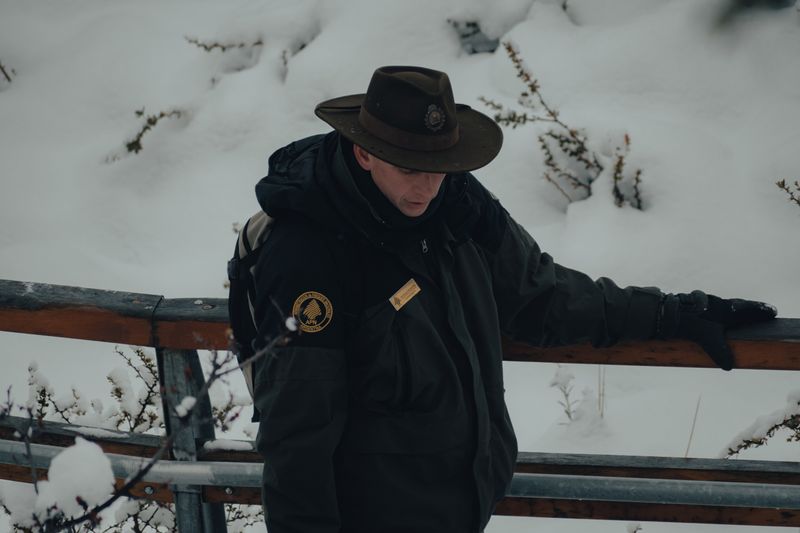
Wardens typically live in for the whole season, managing bookings, cooking, weather advice and occasionally rescue coordination. The job combines hospitality, logistics and mountain judgement, and turnover is low because people who like it stay.
In practice, they are the best source of route information in the range, and asking is expected. Wardens are frequently the first link in a rescue as well, holding the radio and knowing who left for where that morning, which is the other reason to tell them your intended route rather than only your bed number.
None of this is uniform across a country the size of most of these.
The mountain the hut stands on is changing
Many high huts are founded on ground that used to be frozen all year, and as permafrost thaws the rock holding their anchors loses cohesion, which is why several have been underpinned, rebuilt or moved outright. Approaches change with them: retreating glaciers leave steep unstable moraine and bare polished slab where a straightforward snow slope used to be, and the ladders and fixed cables bridging that gap get extended a little further down most years.
The detail that matters: water is the quieter problem, because a hut supplied by a snowfield that no longer survives the season has to fly water in or ration what it has. Wardens see all of this first, which is why hut and route advice in the high ranges now changes within a season rather than between editions of a guidebook.
The takeaway
Join an affiliated club before an alpine trip. It pays for itself in three nights.
What holds up over a week outdoors is rarely what looks best at the trailhead.
Questions readers ask
Why are huts expensive?
Helicopter resupply, a short season, and the cost of water, power and waste treatment at altitude. Club membership reduces the price substantially.
Can I turn up without booking?
Increasingly not in season. Huts have limited beds and prepare meals to numbers; unbooked arrivals may be refused or sleep on an emergency mattress.